

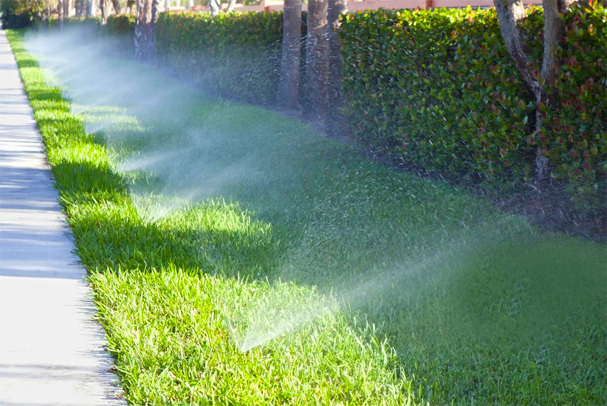
A bore pump that stops working can disrupt your entire irrigation system. Sprinklers may lose pressure, watering stations may stop operating, or the pump may run without delivering water.
Bore pump repairs in Perth begin with identifying whether the fault is in the pump, electrical controls, groundwater supply or connected reticulation system. Low water pressure or a pump that fails to start does not automatically mean the equipment needs replacing.
This guide explains seven common bore pump faults, what causes them, which checks are safe to perform, and when professional fault finding or replacement is necessary.
TLC Reticulation provides bore fault finding, pump replacement and upgrades across Perth, including services for submersible and centrifugal pumps.
What Causes Bore Pump Problems in Perth?
Bore pump problems generally fall into four categories:
- Electrical and control faults: Problems with the power supply, controller, wiring, switching equipment or motor.
- Mechanical pump faults: Worn or damaged components that affect the pump’s ability to move water.
- Water supply problems: Low groundwater levels, sediment or restrictions affecting the available water.
- Reticulation system faults: Leaking pipes, blocked sprinklers, faulty valves or incorrect system configuration.
The first step in diagnosing a bore pump problem is to establish which part of the system is responsible.
For example, a working pump may still produce poor sprinkler pressure if water is escaping through an underground pipe leak.
Similarly, an irrigation controller may appear to be operating correctly even though a wiring fault prevents the pump from starting.
A thorough assessment considers the pump and the wider irrigation system together.
7 Common Bore Pump Faults and How to Identify Them
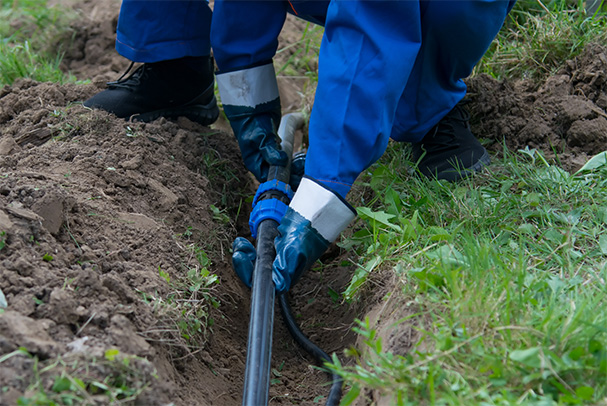
1. Bore Pump Not Starting
A bore pump that does not start may have an electrical fault, a controller problem or a failed motor.
Common causes include:
- Interrupted electrical supply
- Faulty irrigation controller
- Damaged control wiring
- Defective switching equipment
- Pump motor failure
- Protective devices shutting down the equipment
What can you check?
Start by reviewing the irrigation controller. Confirm that the watering schedule is active and check for visible error messages.
If the controller appears to operate but the pump does not respond, professional electrical and mechanical testing may be required.
If your bore pump isn’t starting, contact TLC Reticulation for professional bore pump fault finding in Perth. Electrical repairs should be carried out by a licensed electrician.
2. Bore Pump Running but No Water Coming Out
A bore pump may run without delivering enough water to the sprinklers.
Possible causes include:
- Low groundwater availability
- Loss of prime in a surface-mounted pump
- Blocked suction or intake components
- Damaged or disconnected pipework
- Worn pump components
- Restrictions within the irrigation network
What should you do?
Stop the pump if it is operating without delivering water. Continued operation under unsuitable conditions can damage pumping equipment.
A technician can assess the water source, pump performance and pipework to identify the cause.
Replacing the pump before investigating the water supply may not resolve the problem.
3. Low Water Pressure From the Bore Pump
Low pressure can affect sprinkler coverage and prevent irrigation stations from operating correctly.
Common symptoms include:
- Sprinkler heads failing to rise fully
- Weak or uneven spray patterns
- Reduced coverage across the lawn
- Pressure dropping when a watering station starts
- Some irrigation zones receiving less water than others
Possible causes include worn pump components, underground leaks, blocked pipes, faulty valves or a mismatch between pump capacity and irrigation demand.
Does low pressure mean the bore pump has failed?
No. Low water pressure is a symptom, not a confirmed diagnosis.
A professional assessment should determine whether the problem originates in the pump or elsewhere in the reticulation system.
4. Bore Pump Keeps Tripping the Circuit Breaker
A bore pump that repeatedly trips its electrical protection may have a motor, wiring or electrical supply fault.
Potential causes include:
- Damaged electrical insulation
- Motor failure
- Moisture entering electrical equipment
- Electrical overload
- Mechanical problems affecting motor operation
Repeated tripping should be treated as a safety warning.
Recommended action: Stop operating the pump and contact TLC Reticulation for professional bore pump fault finding in Perth. If an electrical fault is identified, repairs should be carried out by a licensed electrician.
Never bypass electrical protection or repeatedly reset a circuit breaker to keep the pump running.
5. Bore Pump Starts and Stops Repeatedly
Frequent starting and stopping, sometimes called short cycling, can increase wear on the pump.
Possible causes include:
- Faulty pressure controls
- Leaking pipework
- Incorrect switching settings
- Controller faults
- An unsuitable pumping arrangement
The cause depends on how the bore system is configured.
A technician may need to inspect the pump controls, operating pressure and connected irrigation system.
6. Bore Pump Making Unusual Noises
Unusual grinding, rattling or excessive vibration may indicate mechanical wear or abnormal operating conditions.
Potential causes include:
- Worn bearings or other components
- Air entering the pumping system
- Cavitation
- Loose equipment
- Restrictions affecting water flow
Not every noise indicates a failed pump. However, significant changes in operating sound should be investigated.
If the pump is making severe noises or delivering substantially less water than normal, stop operating it until the cause is assessed.
7. Bore Pump Losing Water Flow Over Time
A gradual reduction in water flow can indicate a developing pump or bore problem.
Possible causes include:
- Sediment accumulation
- Pump wear
- Scaling or corrosion
- Restrictions in the bore or pipework
- Changing groundwater levels
Perth’s groundwater conditions can influence bore performance, particularly where systems draw from shallow aquifers.
The pump and water source should be assessed together before deciding on a repair or replacement.
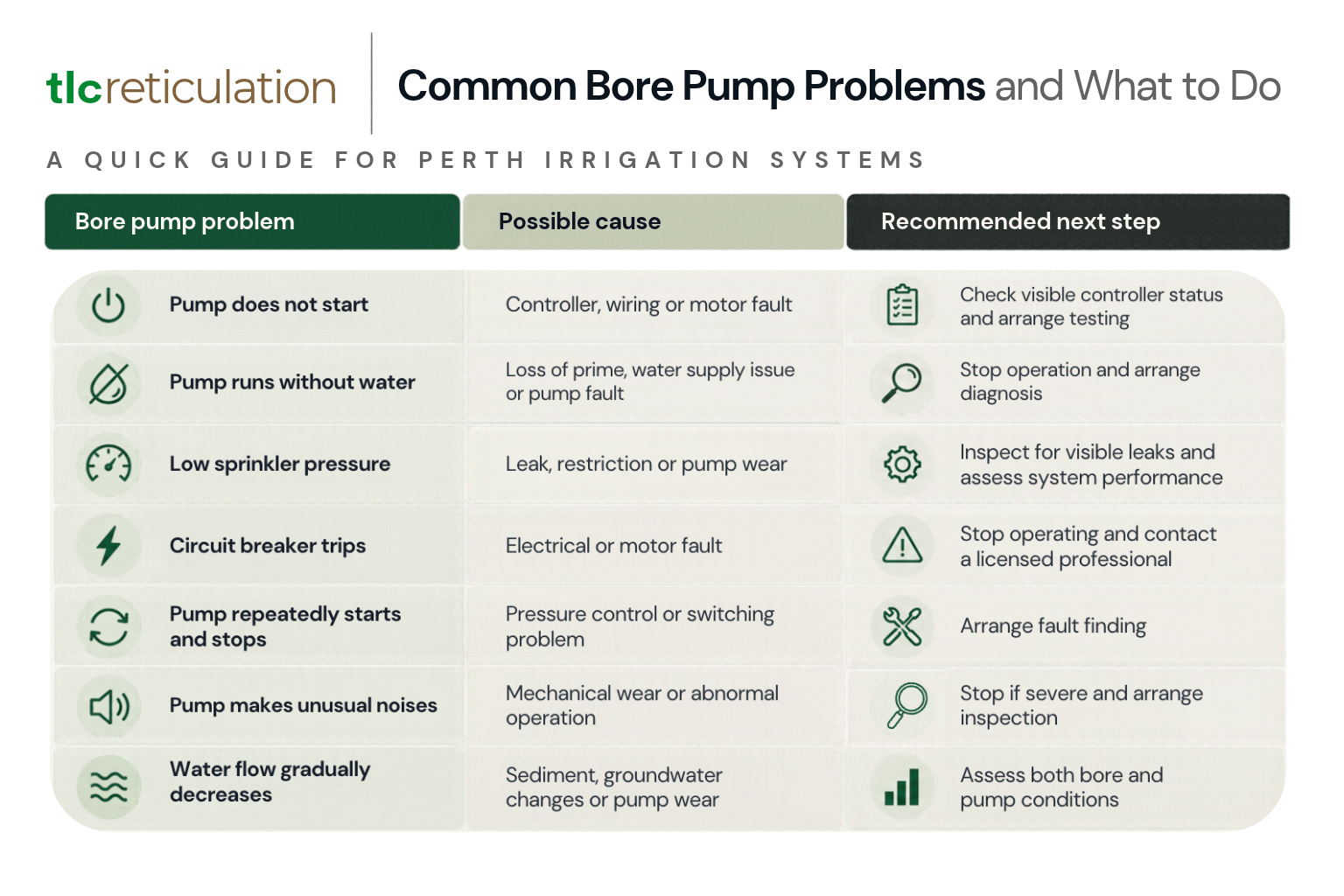
Bore Pump Troubleshooting: A Quick Diagnosis Guide
The following table summarises common symptoms and possible causes.
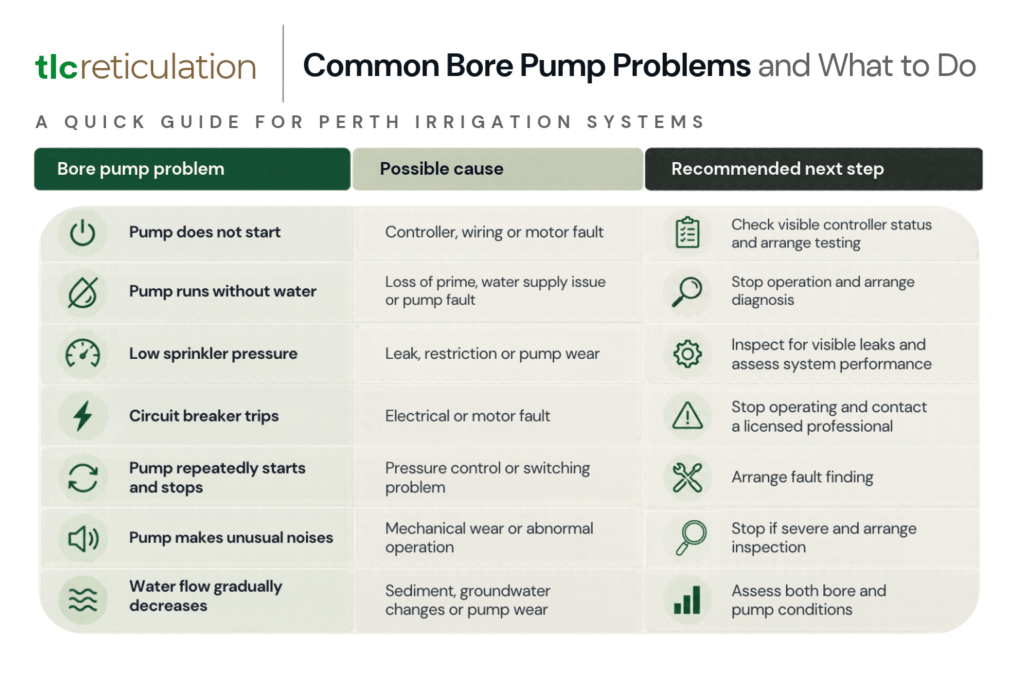
| Bore pump problem | Possible cause | Recommended next step |
| Pump does not start | Controller, wiring or motor fault | Check visible controller status and arrange testing |
| Pump runs without water | Loss of prime, water supply issue or pump fault | Stop operation and arrange diagnosis |
| Low sprinkler pressure | Leak, restriction or pump wear | Inspect for visible leaks and assess system performance |
| Circuit breaker trips | Electrical or motor fault | Stop operating and contact a licensed professional |
| Pump repeatedly starts and stops | Pressure control or switching problem | Arrange fault finding |
| Pump makes unusual noises | Mechanical wear or abnormal operation | Stop if severe and arrange inspection |
| Water flow gradually decreases | Sediment, groundwater changes or pump wear | Assess both bore and pump conditions |
Three Checks You Can Make Before Calling a Technician
Check the irrigation controller. Look for visible error messages, incorrect schedules or stations that are not activating.
Inspect accessible irrigation areas. Check for broken sprinklers, leaking fittings and unusually wet ground that may indicate damaged pipework.
Identify whether all watering stations are affected. A problem affecting every station may involve a shared component. A problem affecting only one station may be localised to that irrigation zone.
These observations can help explain the problem, but they do not replace professional fault finding.
Bore Pump Repair or Replacement: Which Is the Better Option?
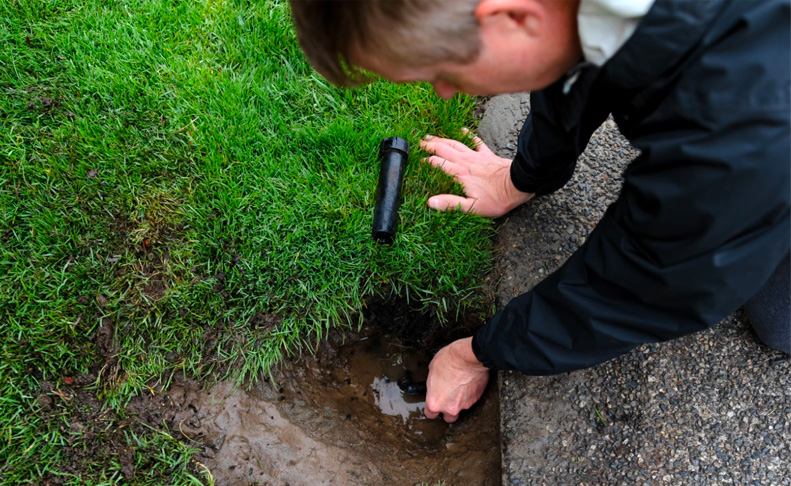
A bore pump does not always need replacing when the irrigation system stops working.
The most appropriate solution depends on the fault, pump condition, availability of replacement parts and the cost of the required work.
When Bore Pump Repair May Be Suitable
Repair may be worth considering when:
- The fault involves a replaceable component.
- The pump is otherwise in reasonable condition.
- Suitable parts are available.
- The repair cost is economical.
- The problem is caused by external controls, wiring or pipework.
In some cases, fixing a controller or irrigation fault can restore water delivery without replacing the pump.
When Bore Pump Replacement May Be Necessary
Replacement may be the better option when:
- The motor has suffered major damage.
- Pump components are severely worn or corroded.
- Replacement parts are unavailable.
- Repair costs are excessive.
- The pump is no longer suited to the irrigation system.
- Repeated failures make operation unreliable.
Bore Pump Repair vs Replacement
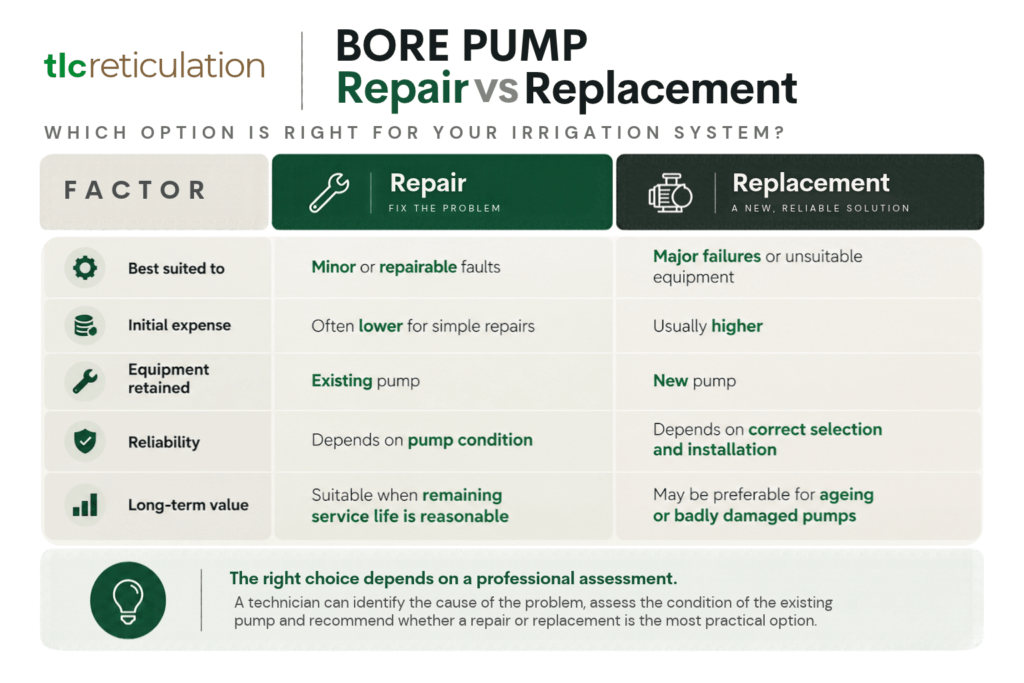
| Factor | Repair | Replacement |
| Best suited to | Minor or repairable faults | Major failures or unsuitable equipment |
| Initial expense | Often lower for simple repairs | Usually higher |
| Equipment retained | Existing pump | New pump |
| Reliability | Depends on pump condition | Depends on correct selection and installation |
| Long-term value | Suitable when remaining service life is reasonable | May be preferable for ageing or badly damaged pumps |
The decision should follow an assessment rather than being based on symptoms alone.
TLC Reticulation provides bore fault finding, pump replacement and upgrades in Perth.
For details, see our Bore Installation and Repairs service page.
Submersible Bore Pump Problems in Perth
A submersible bore pump operates below the water level inside the bore.
These pumps are commonly used to lift groundwater into an irrigation system.
Because the equipment is installed underground, accessing a fault can be more involved than working on a surface-mounted pump.
Common Submersible Pump Faults
Submersible pumps may experience:
- Motor or electrical failure
- Damaged cables
- Worn pumping components
- Sediment-related wear
- Reduced water delivery
- Intermittent operation
Some faults can be identified through testing without immediately removing the pump. Other problems may require retrieval and inspection.
The appropriate approach depends on the equipment and the symptoms.
Can a Submersible Bore Pump Be Repaired?
Some components may be repairable, but the feasibility depends on the pump design, condition and availability of parts.
Where repair is impractical, replacing the pump may be necessary.
TLC Reticulation provides submersible pump replacement as part of its Perth bore services.
Centrifugal and Pressure Pump Problems
Surface-mounted centrifugal pumps have different operating requirements from submersible pumps.
For example, some centrifugal pumping systems must remain correctly primed to draw water effectively.
Common Centrifugal Pump Faults
Problems may include:
- Loss of prime
- Leaking seals or fittings
- Restricted suction lines
- Worn internal components
- Excessive vibration
- Motor faults
A pump that repeatedly loses prime may have a suction-side issue rather than a failed motor.
What Causes Pressure Pump Problems?
Pressure pump performance can be affected by:
- Faulty pressure controls
- Leaking pipes
- Incorrect operating settings
- Worn pump components
- Excessive irrigation demand
Before replacing a pressure pump, the system should be checked for leaks, restrictions and other factors affecting performance.
TLC Reticulation provides centrifugal pump replacement and pump upgrades across Perth.
How Much Do Bore Pump Repairs Cost in Perth?
Bore pump repair costs in Perth depend on the type of pump, the fault and the work required.
A controller-related problem may involve relatively straightforward testing. Replacing a submersible pump may require equipment retrieval, new components and additional installation work.
What Affects the Cost of Bore Pump Repairs?
Pump type
Submersible, centrifugal and pressure pumps have different installation and servicing requirements.
Nature of the fault
Electrical, mechanical, control-related and water supply problems require different diagnostic work.
Accessibility
A surface-mounted pump may be easier to inspect than equipment installed inside a bore.
Replacement parts
The availability and specifications of replacement components affect repair costs.
Labour requirements
Testing, pump retrieval, installation and system commissioning can influence the final price.
Condition of the irrigation system
Additional faults involving valves, controllers or pipework may need to be addressed.
Is It Cheaper to Repair or Replace a Bore Pump?
A minor repair will often cost less initially than replacing the entire pump.
However, repeated repairs to badly worn equipment may be less economical over time.
The best decision considers the current fault, repair estimate, replacement cost and expected reliability.
A professional assessment is the most reliable way to establish the likely cost of the work.
How Perth Groundwater Conditions Affect Bore Pumps
Perth’s garden bores commonly draw groundwater from the shallow watertable aquifer.
According to the Western Australian Government, groundwater conditions vary across the metropolitan area. Factors such as watertable depth, salinity and local geology influence bore suitability and performance.
These conditions matter when investigating a pump that is losing pressure or delivering less water.
Groundwater Levels
Changes in groundwater availability can affect the amount of water a bore can supply.
A pump may be functioning mechanically but unable to deliver its expected flow if the water source is insufficient.
Sediment and Restrictions
Sediment can contribute to wear and restrict water movement through pumping equipment.
Sandy or discoloured bore water may indicate a problem that requires investigation.
Salinity and Water Quality
Groundwater quality varies across Perth.
The WA Government’s Perth Groundwater Map provides information about estimated watertable depth, aquifer conditions and groundwater salinity.
These factors can be relevant when assessing an existing bore or planning a new installation.
Bore Pump Maintenance: How to Reduce Unexpected Failures
Regular maintenance can help identify developing problems and support reliable irrigation performance.
1. Check Sprinklers and Pipework
Inspect accessible irrigation components for leaks, damaged sprinklers and poor water coverage.
A leak can reduce pressure and affect the pump’s operating conditions.
2. Monitor Changes in Water Pressure
Pay attention to weaker sprinkler performance or uneven irrigation coverage.
Changes in pressure may indicate a pump fault or a problem elsewhere in the system.
3. Review Controller Settings
Incorrect watering schedules and controller faults can interrupt irrigation even when the pump is operating correctly.
4. Watch for Unusual Pump Behaviour
Repeated shutdowns, excessive vibration and changes in operating noise should be investigated.
5. Follow the Pump Manufacturer’s Maintenance Guidance
Maintenance requirements vary between pump models.
Follow the manufacturer’s instructions and use qualified professionals for electrical and mechanical work.
6. Arrange Professional Fault Finding When Needed
Early investigation can help identify faults before they cause further equipment damage or prolonged irrigation interruptions.
Bore Pump Testing and Watering Restrictions in Perth
Garden bore users in Perth must comply with applicable watering restrictions.
The Western Australian Government advises that domestic garden bore users in Perth and Mandurah follow a two-days-per-week sprinkler roster.
Additional restrictions apply during the winter sprinkler switch-off.
Can You Test a Bore Pump Outside Watering Days?
Limited operation for installation, maintenance, testing or repairs may be permitted under specific exemptions.
The WA Government recommends carrying out maintenance and testing on allocated roster days, before 9 am or after 6 pm, and limiting operation to no more than two minutes per station.
Water Corporation also provides guidance on irrigation testing during the sprinkler switch-off.
Always check current requirements before testing a bore-fed irrigation system.
Do Commercial Bore Systems Follow the Same Rules?
Not necessarily.
Commercial groundwater use and larger irrigation systems may be subject to different licensing requirements and operating conditions.
The WA Government states that groundwater use for commercial purposes, or irrigation of garden and lawn areas of 2,000 square metres or more, can require a water licence.
Property owners and operators should check the requirements that apply to their particular system.
When Should You Arrange Professional Bore Pump Repairs?
Professional assessment is recommended when:
- The pump has stopped delivering water.
- The circuit breaker repeatedly trips.
- Water pressure has dropped significantly.
- The pump makes unusual noises.
- The system repeatedly starts and stops.
- Water flow continues to decline.
- A submersible pump may need retrieval.
- Pump replacement or an upgrade is being considered.
The purpose of fault finding is to identify the cause before deciding on repairs or replacement.
Frequently Asked Questions About Bore Pump Repairs Perth
Why is my bore pump not working?
A bore pump may stop working because of controller faults, damaged wiring, motor failure, insufficient groundwater or problems in the connected pipework. The cause should be confirmed through fault finding.
Why is my bore pump running but not pumping water?
Possible causes include loss of prime, low groundwater levels, blocked components, damaged pipes or pump failure. Stop operating the pump if it is running without delivering water.
Can a bore pump be repaired?
Some bore pump faults can be repaired. However, major motor damage, severe wear or unavailable replacement parts may make replacement more practical.
What causes low bore pump pressure?
Low pressure can result from worn pump components, underground leaks, blocked pipework, faulty valves or groundwater supply problems. It does not automatically mean the pump needs replacing.
How much do bore pump repairs cost in Perth?
Costs depend on the pump type, fault, equipment accessibility, parts and labour required. An assessment is usually needed before an accurate repair estimate can be provided.
How long does a bore pump last?
There is no fixed lifespan for every bore pump. Water quality, operating conditions, installation, maintenance and equipment quality all affect service life.
Can a submersible bore pump be replaced?
Yes. Submersible pumps can be retrieved and replaced when necessary. The work should be performed by appropriately qualified professionals.
Why does my bore pump keep tripping the power?
Repeated tripping may indicate an electrical supply, wiring or motor problem. Stop operating the pump and arrange licensed electrical inspection.
Does a bore pump need regular maintenance?
Yes. Regular inspection and appropriate servicing can help identify faults and maintain reliable irrigation performance.
Who provides bore pump fault finding in Perth?
TLC Reticulation provides bore fault finding, submersible and centrifugal pump replacement, pump upgrades and related reticulation services across Perth.
Bore Pump Repairs and Fault Finding Across Perth
A bore pump that stops working, loses pressure or delivers insufficient water can affect the entire irrigation system.
The right solution depends on identifying whether the problem involves the pump, electrical controls, groundwater supply or connected reticulation components.
TLC Reticulation provides bore fault finding, pump replacement, upgrades and related irrigation services across Perth.
Services include:
- Bore pump fault finding
- Submersible pump replacement
- Centrifugal pump replacement
- Pump upgrades
- Bore automation
- Reticulation repairs and troubleshooting
For more information, visit our Bore Installation and Repairs page.
You can also contact TLC Reticulation to discuss your bore pump problem.
Phone: 0431 248 007